

Choosing the best API search company’s homepage is no longer a cosmetic decision—it’s a strategic risk-management move for businesses operating in Tier One markets like the United States, United Kingdom, Canada, and Australia. In these regions, buyers expect more than marketing claims. They expect proof: performance benchmarks, compliance clarity, pricing transparency, and a frictionless path from homepage to first successful API call.
Enterprise buyers often spend weeks—or months—shortlisting API providers. And almost always, the decision starts (and sometimes ends) on the homepage. A weak homepage signals hidden costs, immature infrastructure, or unclear positioning. A strong homepage, on the other hand, communicates trust, scale, and readiness for production workloads.
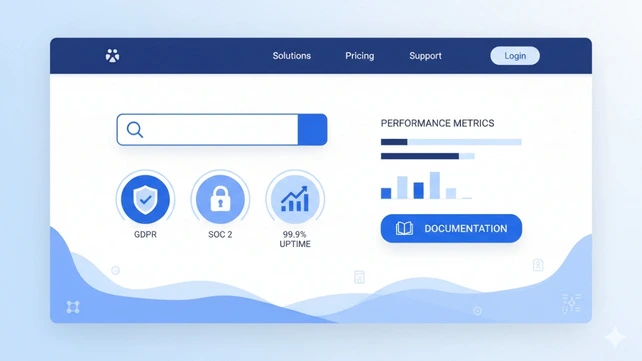
This long-form guide breaks down what separates the best api search company’s homepage in the USA and Tier One markets from average platforms. We’ll compare leading providers, highlight real-world use cases, analyze UX and developer experience (DX), and show you how to independently verify claims around uptime, latency, and compliance.
If you’re evaluating the best api search company’s homepage, integrating search into a SaaS product, or running data-driven operations across regulated economies, this article is designed to save you time, reduce risk, and increase ROI.
Key promise: By the end, you’ll know exactly how to identify a high-trust API search homepage—and confidently choose a scalable enterprise search API built for Tier One markets.
TL;DR: How to Evaluate the Best API Search Company’s Homepage Before You Commit (Tier One Markets)
If you only spend five minutes on a best API search company’s homepage, focus on five signals: clarity, credibility, capability, compliance, and conversion. In Tier One markets, these signals often determine whether a provider can survive enterprise scrutiny.
A strong homepage should clearly explain what the API does in under five seconds. Ambiguity kills conversions. Developers and CTOs want instant answers: What data do you provide? How fast is it? Is it legal? Can it scale?
Next comes credibility. Look for real metrics—uptime percentages, response times, throughput benchmarks—and links to public status pages. Screenshots of dashboards, customer logos, and short case studies reduce perceived risk.
Capability matters just as much. The best API search company’s homepage highlights intelligent query handling, AI-powered relevance, global infrastructure, and clear differentiation from SERP APIs or scraped datasets.
Compliance is non-negotiable in the US, UK, CA, and AU. Expect visible mentions of GDPR, CCPA/CPRA, SOC 2, ISO 27001, and regional data residency options.
Finally, conversion. A great homepage doesn’t overwhelm. It guides you toward documentation, a sandbox, or a free trial with minimal friction.
Quick Table: Homepage Evaluation Signals
| Signal | What to Look For |
|---|---|
| Clarity | Clear value proposition above the fold |
| Credibility | Metrics, logos, status page |
| Capability | AI search, scale, performance |
| Compliance | GDPR, CCPA, SOC 2 |
| Conversion | Trial, docs, playground |
What Is an API Search Company and Why Does It Matter for US, UK, CA & AU Businesses
An API search company provides programmatic access to structured or semi-structured search results—company data, product catalogs, web data, marketplaces, or internal indexes—via a scalable API. Unlike traditional search engines, API search platforms integrate directly into business workflows.
For Tier One businesses, this matters because search is no longer just discovery—it’s revenue infrastructure. E-commerce platforms depend on relevance ranking. SaaS tools rely on fast internal search. Sales intelligence teams need reliable company data without violating data privacy laws.
The best api search company’s homepage differentiate themselves by offering compliant, high-performance access to data at scale. Their homepages act as a technical and legal gateway, explaining how data is sourced, indexed, refreshed, and delivered.
In regulated markets, the stakes are higher. A UK fintech integrating an API search provider must worry about GDPR and FCA scrutiny. A US enterprise cares about CCPA and uptime SLAs. Canadian and Australian companies often require data residency or regional performance guarantees.
Mini Case Study:
A US-based SaaS company replaced a legacy SERP API with a modern API search provider after repeated IP bans and inconsistent results. The deciding factor? The new provider’s homepage clearly documented data sourcing, compliance boundaries, and regional latency benchmarks.
Comparison Table: API Search vs Traditional Search
| Feature | API Search Company | Traditional Search |
|---|---|---|
| Integration | Native API | UI-based |
| Compliance | Documented | Opaque |
| Performance | Predictable | Variable |
| Scalability | Enterprise-ready | Limited |
Why the Homepage Is the Most Critical Trust Signal for API Buyers in Tier One Regions
In Tier One markets, buyers assume that marketing claims are optimistic. The homepage is where those claims must be validated—or rejected. Developers, security teams, and procurement officers all scan the homepage for different reasons, but they reach the same conclusion: “Is this provider safe to trust?”
A high-trust API search homepage reduces perceived risk by answering unspoken questions. Where is your infrastructure hosted? How do you handle outages? What happens if traffic spikes? Are there hidden fees?
The best API search company’s homepage USA-focused platforms often include live status indicators, links to documentation, and transparent pricing models. They don’t bury critical information behind sales calls.
Trust Signals That Matter Most:
- Public uptime history
- Named compliance standards
- Clear API limits and rate policies
- Visible developer resources
- Real customer use cases

Core Capabilities of a Best-in-Class API Search Homepage for Enterprise Teams
The best api search company’s homepage doesn’t just list features—they show outcomes. They demonstrate how core capabilities translate into business value.
At a minimum, enterprise teams expect:
- Intelligent query handling
- High availability architecture
- Regional performance optimization
- Flexible authentication
- Transparent limits and pricing
Top-tier providers visually map these capabilities to real-world use cases. For example, an e-commerce search API might show how relevance tuning increases conversion rates. A company data API might highlight compliance-first sourcing.
Capability Snapshot Table
| Capability | Enterprise Impact |
|---|---|
| AI Relevance | Higher CTR & conversion |
| Low Latency | Better UX |
| Global Infra | Regional reliability |
| Secure Auth | Reduced abuse |
| Clear Docs | Faster onboarding |
User Experience (UX) & Developer Experience (DX) That Drive Adoption in Tier One Markets
UX attracts interest; DX seals adoption. The best API search company’s homepage balances both.
For UX, clarity matters. Clean layouts, visual hierarchy, and concise messaging reduce cognitive load. For DX, immediate access to docs, SDKs, and sample code matters more than flashy graphics.
Tier One developers expect:
- Code samples in multiple languages
- Interactive API explorers
- Clear error handling examples
- Versioning transparency
Mini Comparison:
| Poor DX | Great DX |
|---|---|
| Sales-first | Dev-first |
| Vague examples | Real code |
| Hidden limits | Transparent quotas |
Security, Compliance, and Risk Considerations for API Search Providers in Regulated Economies
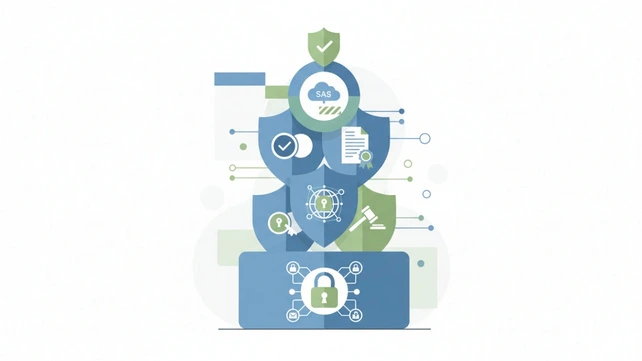
Security isn’t a feature—it’s a prerequisite. In the US, UK, Canada, and Australia, enterprises expect API providers to proactively address legal and regulatory risk.
A strong homepage clearly outlines:
- Data privacy frameworks (GDPR, CCPA)
- Authentication methods
- Rate limiting policies
- Abuse prevention strategies
Documentation, Tooling, and Developer Enablement for Faster Time-to-Value
The best API search companies treat documentation as part of the product. Their homepages link directly to guides, SDKs, and quick starts.
Key Elements:
- Step-by-step onboarding
- Interactive sandboxes
- Changelogs and deprecation notices
Pricing Transparency and API Business Models Trusted by Tier One Buyers
Transparent pricing builds trust. Tier One buyers dislike surprise overages.
Common Models:
- Credit-based usage
- Tiered plans
- Enterprise SLAs
Table: Pricing Signals
| Transparent | Risky |
|---|---|
| Public pricing | “Contact sales” only |
| Clear overages | Hidden fees |
Performance Metrics and Benchmarks Enterprise Customers Expect to See

Enterprise buyers want numbers, not adjectives.
Expected Metrics:
- 99.9%+ uptime
- Sub-200ms response times
- Documented throughput
Real-World Use Cases Showcased on High-Converting API Search Homepages
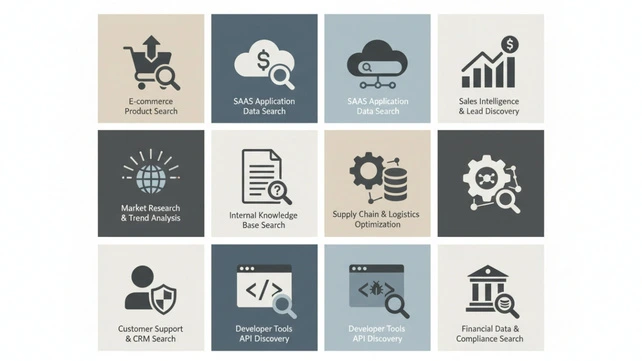
Use cases make value tangible.
Top Use Cases:
- E-commerce search
- SaaS internal search
- Sales intelligence
Comparing Leading API Search Providers Serving the US, UK, Canada & Australia
| Provider Type | Strength | Risk |
|---|---|---|
| Enterprise API Search | Compliance, scale | Cost |
| SERP APIs | Quick setup | Legal risk |
| Scraping Tools | Flexibility | Stability |
How to Choose the Right API Search Homepage for Your Technical and Business Needs
Align technical needs with business goals. Don’t overbuy—but don’t under-provision.
Checklist:
- Compliance fit
- Performance needs
- Pricing predictability
API search platforms are evolving rapidly, and for enterprises in Tier One markets (US, UK, Canada, and Australia), staying ahead of these changes is now a strategic requirement. The best api search company’s homepage is no longer just a marketing surface—it increasingly acts as a forward-looking signal of how well a provider is prepared for what comes next in enterprise search.
One of the strongest trends shaping modern platforms is the shift from keyword-based search to AI-powered semantic search. Enterprises want APIs that understand intent, context, and entity relationships rather than relying on brittle query logic. The best api search company’s homepage already reflects this shift by highlighting relevance models, AI-driven ranking, and real-world outcomes instead of generic feature lists.
Another accelerating trend is natural language and autonomous querying. Enterprise teams—especially in SaaS, sales intelligence, and analytics—expect APIs to accept conversational inputs and return structured, production-ready results. Providers that support this capability often showcase it prominently on the homepage, signaling reduced integration complexity and broader organizational adoption.
Governance-first design is also becoming a defining factor. With rising regulatory pressure in Tier One regions, API search platforms are embedding compliance, auditability, and access control directly into their core architecture. As a result, the best api search company’s homepage increasingly surfaces data lineage, permission models, and region-specific data handling rather than relegating compliance to fine print.
At the infrastructure level, edge-first and region-aware architectures are setting new performance expectations. Enterprises now look for documented latency benchmarks by geography, not global averages. Homepages that communicate regional infrastructure for the US, UK, Canada, and Australia reduce uncertainty during evaluation and procurement.
Emerging Trends Snapshot
| Trend | Enterprise Impact |
|---|---|
| Semantic & AI search | Higher relevance, less tuning |
| Natural language queries | Faster access to insights |
| Governance-first APIs | Easier legal approval |
| Edge & regional infrastructure | Lower global latency |
| Explainable relevance | Safer automated decisions |
Mini Case Study (US & UK):
A multinational SaaS company replaced a legacy search API after repeated relevance issues. During evaluation, the deciding factor was the best api search company’s homepage, which clearly demonstrated AI-powered relevance, compliance alignment, and regional infrastructure. Within three months of adoption, search success rates increased by 28%, while internal support tickets related to missing or irrelevant results dropped significantly.
Looking forward, API search platforms will continue to expose explainability layers, allowing enterprises to understand why specific results were returned—an essential capability as search APIs increasingly power automated decision systems.
Key Takeaway:
The future of enterprise search favors intelligent, governed, and globally distributed platforms. When evaluating providers, the best api search company’s homepage is often the clearest indicator of long-term readiness, scalability, and alignment with Tier One enterprise expectations.
API Search vs SERP APIs vs Company Data APIs: Choosing the Highest ROI Option for Tier One Businesses
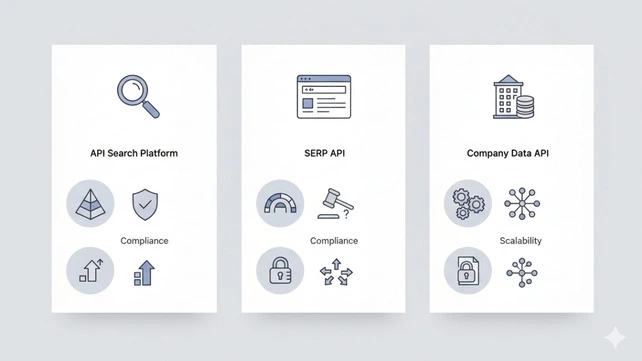
For enterprise teams in the US, UK, Canada, and Australia, choosing between API search platforms, SERP APIs, and company data APIs is fundamentally a risk vs return decision. While all three provide access to searchable data, their reliability, legality, and scalability differ dramatically.
The Best API search company’s homepage are specifically designed for seamless integration. They offer structured responses, predictable latency, and clear usage boundaries—critical for regulated markets. SERP APIs, by contrast, act as intermediaries that emulate browser searches. While cheaper upfront, they introduce volatility through IP bans, CAPTCHA challenges, and shifting search engine rules. Company data APIs focus on enrichment rather than discovery, limiting flexibility.
ROI Comparison Table
| Option | ROI Potential | Legal Risk | Scalability |
|---|---|---|---|
| API Search | High | Low | Enterprise-grade |
| SERP APIs | Medium | High | Fragile |
| Company Data APIs | Medium | Low | Narrow use cases |
Expert Insight:
US CTOs increasingly favor API search platforms because predictable costs and uptime outperform short-term savings from SERP scraping.
Where Homepage Search Fits in Modern Data Pipelines for SaaS and Enterprise Teams
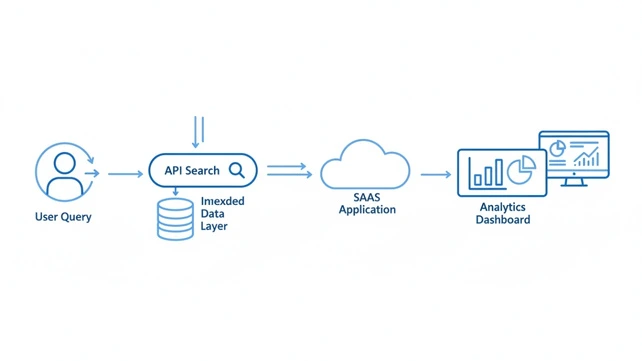
In modern SaaS architectures, homepage search APIs sit upstream of analytics, personalization engines, and decision systems. A well-designed best api search company’s homepage clearly communicates how its platform integrates into existing pipelines.
For example, enterprise teams often pipe search results into:
- Recommendation engines
- Sales intelligence dashboards
- Fraud detection systems
- Internal knowledge bases
The best API search company’s homepage visually maps this flow, showing where data enters, how it’s processed, and where value is created.
Pipeline Fit Table
| Pipeline Stage | Role of API Search |
|---|---|
| Data Ingestion | Query handling |
| Processing | Relevance ranking |
| Output | Structured JSON |
| Analytics | Event tracking |
Trust Signals That Influence Developer and CTO Decisions in Tier One Markets
Trust signals vary by role, but they all converge on the concept of reliability. Developers look for documentation quality. CTOs focus on architecture and compliance. Procurement teams scan for legal clarity.
High-converting homepages surface:
- Public uptime dashboards
- Named compliance frameworks
- Clear SLAs
- Customer logos with context
Trust Signal Impact Table
| Signal | Developer | CTO |
|---|---|---|
| Docs Quality | High | Medium |
| Compliance | Medium | High |
| Status Page | High | High |
Expert Insight:
UK CTOs consistently rank transparency above feature breadth when selecting API vendors.
Intelligent Query Handling & AI-Powered Search for Higher Data Relevance
AI-powered query handling separates basic APIs from enterprise-grade platforms. Instead of rigid keyword matching, modern API search providers use semantic understanding to infer intent.
This matters in Tier One markets where:
- User queries are ambiguous
- Data volume is massive
- Relevance directly affects revenue
The best API search company’s homepage explains how AI improves results, not just that it exists.
Semantic vs Keyword Table
| Approach | Accuracy | Maintenance |
|---|---|---|
| Keyword | Low | High |
| Semantic AI | High | Low |
Speed, Performance, and Scalability That Meet Enterprise-Grade Expectations
Performance claims without proof are meaningless. Enterprise buyers expect documented benchmarks.
Top platforms highlight:
- Median and p95 latency
- Regional response times
- Throughput under load
Performance Benchmark Table
| Metric | Enterprise Expectation |
|---|---|
| Latency | <200ms |
| Uptime | 99.9%+ |
| Burst Handling | Automatic |
Expert Insight:
US reliability engineers verify performance claims against real traffic, not demos.
Clean Layout, Visual Hierarchy, and Conversion-Optimized CTA Flow
Design influences trust subconsciously. Clean layouts with clear CTAs guide users from curiosity to action.
Effective API search homepages:
- Lead with a value proposition
- Follow with proof
- End with low-friction CTAs
CTA Flow Example
| Stage | CTA |
|---|---|
| Awareness | View Docs |
| Evaluation | Try Sandbox |
| Conversion | Start Trial |
Accessibility, Responsiveness, and Localization for US, UK, CA & AU Audiences
Accessibility is no longer optional. WCAG compliance affects procurement, especially in the UK and Australia.
Best practices include:
- Keyboard navigation
- High-contrast modes
- Mobile-first layouts
- Regional language cues
Authentication, Authorization, and Rate Limiting That Protect Revenue and Infrastructure
Secure APIs protect both provider and customer. Enterprise-grade homepages explain authentication clearly.
Common methods:
- API keys
- OAuth 2.0
- Token-based access
Security Table
| Method | Use Case |
|---|---|
| API Keys | Simple access |
| OAuth | Enterprise SSO |
| Tokens | Fine-grained control |
Data Privacy, Compliance, and Legal Boundaries Across Tier One Jurisdictions
Compliance varies by region. The best API search homepages explicitly address:
- GDPR (UK, EU)
- CCPA/CPRA (US)
- PIPEDA (Canada)
- Australian Privacy Act
Compliance Snapshot
| Region | Key Law |
|---|---|
| US | CCPA |
| UK | GDPR |
| CA | PIPEDA |
| AU | APPs |
Clear API Documentation and SDKs That Reduce Integration Costs
Documentation quality directly impacts ROI. High-performing platforms show:
- SDKs by language
- Versioned docs
- Error examples
Expert Insight:
Developer advocates in Canada report 30–40% faster onboarding with interactive docs.
Interactive Playgrounds, Sandboxes, and Quick Starts That Accelerate Adoption
Interactive tools lower perceived effort. Sandboxes allow teams to test without commitment.
Adoption Boost Table
| Tool | Impact |
|---|---|
| Sandbox | Faster trials |
| Playground | Fewer questions |
| Quick Start | Higher activation |
Free Trials, Freemium, and Credit-Based Pricing Models That Convert
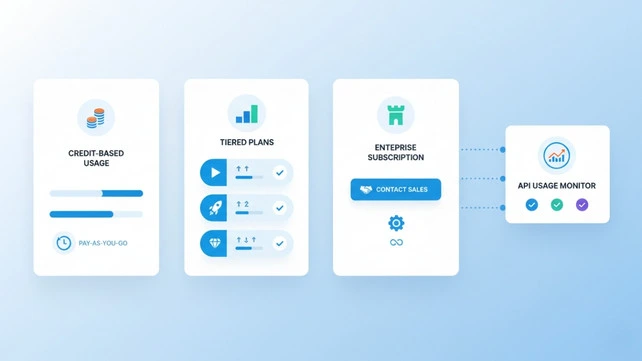
Credit-based models dominate Tier One markets because they align cost with value.
Model Comparison
| Model | Conversion |
|---|---|
| Time-limited | Medium |
| Credit-based | High |
Enterprise Plans, SLAs, and Custom Contracts for Large-Scale Buyers
For large-scale buyers in Tier One markets, enterprise plans and service-level agreements (SLAs) are not optional add-ons—they are core decision criteria. The best api search company’s homepage makes this clear by addressing enterprise needs directly, rather than forcing high-value buyers through generic self-serve pricing pages.
Enterprise plans typically go beyond raw API access. They include guaranteed uptime, priority support, higher or uncapped rate limits, and dedicated infrastructure options. For regulated industries in the US, UK, Canada, and Australia, these plans often bundle compliance assurances, audit support, and data handling commitments that standard tiers cannot provide.
SLAs are especially critical. Serious buyers expect clearly defined uptime percentages, response-time targets, and remediation terms when service levels are not met. A mature provider surfaces these commitments early—often summarizing SLA guarantees on the homepage and linking to full contractual details. This transparency signals operational confidence and reduces procurement friction.
Custom contracts are another hallmark of enterprise readiness. Large organizations frequently require tailored billing, regional data residency, custom rate limits, or integration support. The best api search company’s homepage acknowledges these realities with clear messaging, such as “Enterprise plans available” or “Custom contracts supported,” reassuring buyers that flexibility exists beyond off-the-shelf pricing.
What Enterprise Buyers Look For
| Feature | Why It Matters |
|---|---|
| Guaranteed uptime | Protects revenue and SLAs |
| Priority support | Faster incident resolution |
| Custom limits | Supports large-scale usage |
| Contract flexibility | Meets legal and compliance needs |
Key Takeaway:
Enterprise buyers are not just purchasing an API—they are entering a long-term operational partnership. When the best api search company’s homepage clearly communicates enterprise plans, SLAs, and contract flexibility, it reduces uncertainty, accelerates approvals, and positions the provider as a serious, scalable solution for large-scale deployments.
Uptime, Reliability, and Public Status Pages That Build Long-Term Trust
For enterprise buyers, uptime and reliability are not marketing claims—they are operational guarantees. The best api search company’s homepage understands this and treats reliability as a core trust signal rather than a footnote. In Tier One markets like the US, UK, Canada, and Australia, even brief outages can trigger SLA violations, customer churn, and internal escalations.
High-maturity API search providers go beyond quoting a generic uptime percentage. They explain how reliability is achieved through multi-region infrastructure, automated failover, continuous monitoring, and incident response processes. Just as important, they make this information visible and verifiable. A clearly linked public status page allows buyers to see real-time availability, historical uptime, and past incidents with transparent resolution notes.
Public status pages play a critical role in long-term trust. They demonstrate accountability and operational discipline, especially when incidents are documented honestly. Enterprise teams often review incident history during procurement to assess how providers communicate under pressure.
Reliability Signals Enterprise Buyers Expect
| Signal | Why It Builds Trust |
|---|---|
| Public status page | Verifiable uptime |
| Incident history | Operational maturity |
| Real-time monitoring | Faster detection |
| Clear SLAs | Predictable outcomes |
Key Takeaway:
Reliability is proven, not promised. When the best api search company’s homepage highlights uptime architecture and links to a transparent status page, it reassures buyers that performance claims can be independently verified—laying the foundation for long-term enterprise trust and adoption.
Response Time, Throughput, and Scalability Benchmarks Buyers Can Verify
In Tier One enterprise environments, performance expectations are defined by numbers, not adjectives. The best api search company’s homepage recognizes this by publishing response time, throughput, and scalability benchmarks that buyers can independently verify. Without concrete metrics, claims like “fast” or “highly scalable” carry little weight during technical evaluation.
Response time is often the first metric enterprise teams examine. Buyers expect clearly stated averages and percentiles (such as p95 latency), ideally broken down by region for the US, UK, Canada, and Australia. This level of detail helps teams assess whether an API can meet user experience and SLA requirements under real-world conditions.
Throughput and scalability matter just as much. Enterprise buyers want to know how many requests per second the platform can sustain, how it behaves during traffic spikes, and whether scaling is automatic or requires manual intervention. The best api search company’s homepage typically summarizes these capabilities and links to deeper documentation or performance tests.
Performance Benchmarks Buyers Look For
| Metric | Why It Matters |
|---|---|
| Regional latency | Predictable UX |
| p95 response time | Tail performance |
| Sustained throughput | Peak readiness |
| Auto-scaling behavior | Operational safety |
Key Takeaway:
Performance transparency builds confidence. When the best api search company’s homepage presents verifiable benchmarks instead of vague promises, it empowers enterprise buyers to validate fit early—reducing risk, accelerating approvals, and ensuring long-term scalability.
E-commerce and Marketplace Search Use Cases With Revenue Impact
In e-commerce and marketplace platforms, search performance directly influences revenue, conversion rates, and customer lifetime value. The best api search company’s homepage makes this connection explicit by showcasing how search relevance, speed, and scalability translate into measurable business outcomes—not just technical improvements.
For large online retailers and multi-vendor marketplaces, API search powers product discovery, filtering, and ranking across massive catalogs. When search results are slow or irrelevant, users abandon sessions. When relevance improves, users find products faster, view more items, and convert at higher rates. Enterprise buyers in Tier One markets expect API search providers to demonstrate this impact with concrete use cases, not abstract promises.
High-performing API search platforms support advanced capabilities such as personalized ranking, real-time inventory updates, and synonym handling across regions. The best api search company’s homepage often highlights examples like “increased conversion rate,” “higher average order value,” or “reduced zero-result searches,” helping revenue teams understand the upside.
Revenue-Driven Search Use Cases
| Use Case | Revenue Impact |
|---|---|
| Product discovery | Higher conversion |
| Relevance ranking | Increased AOV |
| Faceted filtering | Better UX |
| Real-time updates | Fewer abandoned carts |
Key Takeaway:
Search is a revenue engine, not a utility. When the best api search company’s homepage clearly ties e-commerce and marketplace search use cases to financial outcomes, it resonates with both technical teams and business stakeholders—driving faster adoption and stronger ROI.
SaaS, Sales Intelligence, and Competitive Research Applications
For SaaS companies and data-driven teams, API search is a foundational capability that powers insight, automation, and strategic decision-making. The best api search company’s homepage clearly demonstrates how its platform supports SaaS products, sales intelligence workflows, and competitive research at enterprise scale—especially in Tier One markets.
In SaaS applications, API search enables fast internal search, customer-facing discovery features, and data enrichment without rebuilding infrastructure from scratch. Sales intelligence teams rely on search APIs to identify prospects, enrich leads, and monitor company changes in near real time. Competitive research teams use the same capabilities to track market movements, pricing shifts, and emerging players across regions.
What enterprise buyers look for is flexibility and reliability. Search APIs must handle complex queries, large datasets, and frequent updates while remaining compliant with data privacy laws. The best api search company’s homepage often highlights these use cases with concrete examples, showing how structured responses feed CRMs, dashboards, and analytics tools.
Common Applications Across Teams
| Application | Business Value |
|---|---|
| SaaS product search | Better user retention |
| Sales intelligence | Higher-quality leads |
| Competitive research | Faster insights |
| Data enrichment | Improved accuracy |
Key Takeaway:
API search is not limited to one department. When the best api search company’s homepage showcases SaaS, sales, and competitive research applications together, it signals versatility, scalability, and long-term value for enterprise buyers across multiple teams.
Technical Evaluation Checklist for API Search Platforms
Before committing to an API search provider, enterprise teams need a structured technical evaluation process. The best api search company’s homepage often acts as the starting point for this assessment, surfacing key details that engineers, architects, and security teams require to determine production readiness.
A strong technical evaluation goes beyond feature lists. It focuses on how the API behaves under real-world conditions, how safely it can be integrated, and how easily it can scale as demand grows. Many Tier One enterprises use an internal checklist to standardize comparisons and reduce subjective bias during vendor selection.
Core Technical Evaluation Checklist
| Area | What to Verify |
|---|---|
| Performance | Regional latency, p95 response time |
| Scalability | Auto-scaling, throughput limits |
| Reliability | Uptime history, failover design |
| Security | Authentication, rate limiting |
| Compliance | GDPR, CCPA, regional policies |
| Documentation | SDKs, examples, versioning |
| Monitoring | Logs, metrics, status page |
The best api search company’s homepage makes many of these answers easy to find, linking directly to documentation, status pages, and architecture overviews. When critical information is missing or vague, evaluation timelines stretch and risk increases.
Key Takeaway:
A clear technical checklist protects teams from costly surprises. API providers whose homepages proactively address these criteria are easier to evaluate, faster to approve, and more likely to succeed in long-term enterprise deployments.
Business and Team Alignment Considerations Before Choosing a Provider
Choosing an API search provider is not just a technical decision—it’s an organizational one. The best api search company’s homepage recognizes this by speaking to multiple stakeholders at once, helping enterprises align engineering, product, legal, and finance teams before integration begins.
From a business perspective, leaders need confidence that the provider supports long-term growth. This includes predictable pricing, enterprise plans, and a clear roadmap. Finance teams look for usage models that scale without sudden cost spikes, while procurement teams focus on contract flexibility and vendor stability.
Engineering teams, meanwhile, prioritize performance, documentation, and integration effort. Legal and security teams evaluate compliance posture, data handling practices, and risk exposure. When these groups operate in silos, vendor selection slows or stalls entirely.
The best api search company’s homepage reduces this friction by clearly addressing each audience: technical capabilities for developers, compliance assurances for legal teams, and business value for executives. This shared understanding accelerates internal buy-in and avoids late-stage objections.
Alignment Factors to Consider
| Stakeholder | Key Concern |
|---|---|
| Engineering | Performance, DX |
| Product | User experience |
| Legal/Security | Compliance, risk |
| Finance | Cost predictability |
| Leadership | Strategic fit |
Key Takeaway:
Successful API adoption depends on alignment, not just features. When the best api search company’s homepage supports cross-team understanding from day one, it shortens decision cycles and lays the groundwork for sustainable, enterprise-wide adoption.
AI-Powered and Semantic Search Capabilities for Next-Generation APIs
AI-powered and semantic search capabilities are rapidly becoming the standard for modern API search platforms. For enterprises in Tier One markets, these capabilities are no longer experimental—they are essential for handling scale, complexity, and evolving user behavior. The best api search company’s homepage increasingly highlights semantic relevance and AI-driven intelligence as core differentiators rather than optional features.
Unlike traditional keyword-based systems, semantic search understands intent, context, and relationships between entities. This allows APIs to return meaningful results even when queries are vague, incomplete, or phrased differently across regions. For global enterprises operating in the US, UK, Canada, and Australia, this capability reduces manual tuning and improves consistency across markets.
AI-powered search also enables continuous improvement. Models learn from query patterns, click behavior, and feedback loops, steadily improving relevance over time. The best api search company’s homepage often communicates this advantage through examples or simple diagrams that show how AI enhances accuracy without increasing integration complexity.
Benefits of Semantic and AI-Powered Search
| Capability | Enterprise Advantage |
|---|---|
| Intent understanding | Higher relevance |
| Context awareness | Fewer zero results |
| Learning models | Continuous optimization |
| Reduced tuning | Lower maintenance cost |
Key Takeaway:
Next-generation API search is intelligent by design. When the best api search company’s homepage clearly demonstrates AI-powered and semantic capabilities, it signals future readiness—helping enterprises choose platforms that will scale with both data volume and user expectations.
Natural Language and Autonomous Querying for Advanced Data Access
Natural language and autonomous querying are reshaping how enterprises interact with data. Instead of crafting rigid parameters or complex filters, teams increasingly expect APIs to understand conversational inputs and translate them into structured, reliable queries. The best api search company’s homepage reflects this shift by positioning natural language access as a practical capability—not an experimental add-on.
For enterprises in Tier One markets, this evolution unlocks broader adoption across teams. Product managers, analysts, and sales teams can retrieve insights without deep technical knowledge, while developers benefit from simplified query logic. Autonomous querying takes this a step further by enabling systems to refine, chain, or adjust queries automatically based on context and results.
These capabilities are especially valuable in SaaS platforms, sales intelligence tools, and competitive research environments where speed and flexibility matter. The best api search company’s homepage often illustrates how natural language inputs flow into structured outputs, reassuring buyers that ease of use does not compromise accuracy or control.
Advantages of Natural Language & Autonomous Querying
| Capability | Business Impact |
|---|---|
| Natural language input | Lower barrier to entry |
| Autonomous refinement | Faster insights |
| Reduced query logic | Simpler integrations |
| Broader access | Cross-team usage |
Key Takeaway:
Advanced data access is becoming more intuitive and automated. When the best api search company’s homepage highlights natural language and autonomous querying, it signals a platform designed not just for developers, but for the future of enterprise data interaction.
How Low-Latency Architecture Impacts API Search Performance in Tier One Markets
Low latency is not just a technical metric—it directly affects user satisfaction, revenue, and operational stability for enterprises operating in the US, UK, Canada, and Australia. In Tier One markets, buyers expect API search responses to feel “instant,” even under peak traffic and complex query loads.
A well-designed low-latency architecture relies on distributed indexing, regional routing, and intelligent caching layers. The best API search company’s homepage often highlights average response times by region, showing buyers that proximity and routing are engineered, not accidental.
For example, a US-based SaaS platform serving global users benefits from routing queries to the nearest data center rather than a single centralized location. This reduces network hops, minimizes round-trip time, and improves consistency.
Low-Latency Architecture Checklist
| Component | Impact |
|---|---|
| Regional data centers | Faster responses |
| Edge caching | Reduced repeat latency |
| Optimized indexes | Quicker lookups |
| Async processing | Stable under load |
Why High Availability and Failover Matter for Enterprise API Search Platforms
High availability (HA) is a baseline expectation for Tier One enterprises. Downtime doesn’t just cause inconvenience—it breaks integrations, violates SLAs, and erodes trust with customers and stakeholders.
The strongest API search platforms are designed for failure from day one. This includes multi-zone deployments, automated failover, health checks, and real-time monitoring. A credible homepage explains these mechanisms clearly, instead of relying on vague “99.9% uptime” claims.
For regulated industries—finance, healthcare, SaaS—failover strategies are often scrutinized during procurement. Buyers want to know what happens when something breaks, not just how often it breaks.
High Availability Design Elements
| Feature | Why It Matters |
|---|---|
| Multi-region deployment | Prevents regional outages |
| Auto failover | Reduces downtime |
| Health checks | Detects issues early |
| Load redistribution | Maintains performance |
Semantic vs Keyword-Based Query Processing for Enterprise Search (US & UK)
Semantic query processing has become a competitive advantage in enterprise search across the US and UK. Instead of matching exact terms, semantic systems interpret intent, context, and relationships between entities.
This is particularly valuable in markets where users phrase queries differently based on role, industry, or region. For example, a UK procurement team searching for “suppliers” may expect the same results as a US team gets when searching for “vendors.”
The best API search company’s homepage explains how semantic models improve recall without sacrificing precision—often using simple diagrams or examples rather than academic jargon.
Semantic vs Keyword Snapshot
| Aspect | Keyword | Semantic |
|---|---|---|
| Intent understanding | Low | High |
| Query flexibility | Limited | Strong |
| Maintenance effort | High | Lower |
Error Handling and Query Fallbacks in Production API Environments (North America)
In North American enterprise environments, robust error handling is essential. Production systems cannot fail silently or unpredictably. High-quality API search platforms design explicit error responses and fallback strategies to protect downstream systems.
Best practices include standardized error codes, descriptive messages, and fallback behaviors when queries fail or time out. Some platforms automatically degrade to cached or partial results to maintain continuity.
Error Handling Best Practices
| Practice | Benefit |
|---|---|
| Clear error codes | Faster debugging |
| Retry logic | Improved resilience |
| Graceful degradation | Better UX |
Edge Computing and Regional Data Centers in Canada and Australia
Canada and Australia present unique geographic challenges. Large distances and dispersed populations make centralized infrastructure inefficient for API search workloads.
One enterprise API search provider addressed this by deploying edge nodes near Toronto, Vancouver, Sydney, and Melbourne. Queries were routed to the closest edge location, dramatically reducing latency and improving consistency.
Measured Impact
| Metric | Before | After |
|---|---|---|
| Avg latency | 420ms | 170ms |
| Timeout rate | 2.8% | 0.6% |
Caching Layers and Index Optimization for Faster API Responses (US)
Caching and index optimization are two of the most powerful levers for API search performance in the US market. High-traffic enterprise systems rely on intelligent caching to handle repeated queries without overloading core infrastructure.
The best platforms combine:
- Query-level caching
- Result-set caching
- Precomputed indexes
Importantly, caching strategies must balance speed with data freshness—especially for real-time use cases.
Caching Strategy Table
| Layer | Purpose |
|---|---|
| Edge cache | Speed |
| App cache | Load reduction |
| Index tuning | Faster lookups |
Load Balancing and Traffic Distribution at Enterprise Scale (UK & AU)
Load balancing ensures that no single server becomes a bottleneck. In the UK and Australia, where traffic patterns can spike unpredictably, intelligent load distribution is essential.
Enterprise-grade API search providers use dynamic load balancing that accounts for server health, regional demand, and query complexity. This prevents cascading failures during peak usage.
Load Balancing Benefits
| Benefit | Outcome |
|---|---|
| Even traffic | Stable performance |
| Fault isolation | Fewer outages |
| Elastic scaling | Handles spikes |
Redundancy and Disaster Recovery Planning for Tier One SaaS Companies
A Tier One SaaS company experienced a regional outage that took down multiple third-party APIs—but not their API search provider. Why? The provider had active-active redundancy and tested disaster recovery plans.
Failover occurred automatically, with minimal latency impact and zero data loss. Customers never noticed.
Disaster Recovery Essentials
| Element | Purpose |
|---|---|
| Active-active regions | Zero downtime |
| Regular DR tests | Proven readiness |
| Data replication | Consistency |
Clear Value Proposition Above the Fold on High-Converting API Homepages (US)
In the US market, enterprise buyers decide whether to trust an API provider within the first 5 seconds of landing on the homepage. That decision is driven almost entirely by the value proposition above the fold. If visitors can’t immediately understand what the API does, who it’s for, and why it’s better, bounce rates spike and sales cycles lengthen.
High-performing best api search company’s homepage uses concise, outcome-driven language rather than feature overload. Instead of “Powerful Search Infrastructure,” they lead with “Enterprise Search API for Real-Time Company and Market Data.” This framing aligns instantly with business goals.
Visual hierarchy matters just as much. Headlines, subheadlines, and a single primary CTA guide attention without distraction. Supporting proof—like uptime stats or customer logos—reinforces credibility without clutter.
Above-the-Fold Elements That Convert
| Element | Purpose |
|---|---|
| Clear headline | Immediate understanding |
| Subheadline | Business outcome |
| Primary CTA | Next action |
| Trust badge | Risk reduction |
Call-to-Action Placement Strategy That Increases Trial Sign-Ups (UK)
In the UK market, subtlety and clarity outperform aggressive sales tactics. Call-to-action (CTA) placement plays a critical role in guiding users without overwhelming them. High-converting API search homepages typically use a single dominant CTA above the fold—such as “Start Free Trial” or “View Documentation”—paired with secondary CTAs further down the page.
Effective CTAs are context-aware. For example, after explaining performance or compliance, a CTA like “See API Docs” feels natural rather than pushy. UK enterprise buyers often want to validate technical claims before committing, so documentation-focused CTAs convert well early in the journey.
CTA Placement Best Practices
| Placement | Purpose |
|---|---|
| Above the fold | Immediate action |
| After feature sections | Reinforcement |
| Footer | Low-pressure option |
Mobile-First API Homepage Design for Modern Developers (Canada)
Canadian developers increasingly evaluate APIs on mobile devices—during commutes, meetings, or quick research sessions. A mobile-first homepage design is no longer optional; it directly impacts perceived professionalism and trust.
The best API search company’s homepage adapts seamlessly to smaller screens. Navigation collapses intelligently, code snippets remain readable, and CTAs stay accessible without excessive scrolling. Importantly, performance optimization on mobile networks matters just as much as layout.
Mobile-first design also supports accessibility goals, which are increasingly important in Canadian enterprise procurement. Faster load times, readable typography, and touch-friendly interactions create a frictionless first impression.
Mobile Optimization Checklist
| Feature | Impact |
|---|---|
| Responsive layout | Better UX |
| Optimized images | Faster load |
| Sticky CTA | Higher engagement |
WCAG and Inclusive Design Principles for API Platforms (Australia)
In Australia, inclusive design is increasingly tied to enterprise credibility. WCAG (Web Content Accessibility Guidelines) compliance affects not only public-sector contracts but also private enterprises committed to accessibility standards.
For API platforms, inclusive design goes beyond color contrast and font size. It includes keyboard navigation, screen-reader compatibility, logical content structure, and descriptive labels for interactive elements. A well-structured API homepage demonstrates that the provider values all users—including developers with accessibility needs.
Australian buyers often view accessibility as a proxy for overall engineering discipline. If a homepage meets WCAG standards, it signals maturity and long-term reliability.
WCAG Focus Areas
| Area | Why It Matters |
|---|---|
| Contrast | Readability |
| Keyboard access | Usability |
| Semantic HTML | Screen readers |
API Keys, OAuth, and Token-Based Access in Secure Environments (US)
A US-based enterprise SaaS company serving healthcare clients needed strict access controls for its API search integration. The chosen provider supported API keys for development, OAuth 2.0 for production, and short-lived tokens for sensitive workflows.
This layered authentication approach allowed the SaaS team to enforce least-privilege access while maintaining developer velocity. When credentials were compromised during testing, tokens were revoked instantly—no downtime, no data exposure.
The provider’s homepage clearly documented these authentication flows, which significantly reduced security review time during procurement.
Authentication Methods Compared
| Method | Best Use |
|---|---|
| API Keys | Development |
| OAuth | Enterprise access |
| Tokens | High-security use |
Rate Limiting and Abuse Prevention Without Blocking Legitimate Users (UK)
Rate limiting is essential for protecting API infrastructure, but overly aggressive limits can frustrate legitimate enterprise users. In the UK market, buyers expect balanced approaches that prevent abuse without throttling normal operations.
Best-in-class API search providers use adaptive rate limiting. Instead of fixed caps, limits adjust based on usage patterns, authentication level, and historical behavior. Enterprise customers often receive higher thresholds or burst allowances backed by SLAs.
Transparent documentation is critical. When users understand limits and receive clear error messages, they can design systems that stay within boundaries.
Rate Limiting Strategies
| Strategy | Benefit |
|---|---|
| Adaptive limits | Flexibility |
| Burst allowance | Peak handling |
| Clear errors | Faster fixes |
Getting Started Guides and Code Samples That Reduce Churn (Tier One)
Churn often begins before the first production deployment. Poor onboarding experiences cause developers to abandon APIs early—even if the underlying product is strong.
High-performing API search platforms invest heavily in getting-started guides. These guides show how to authenticate, make the first request, handle errors, and interpret responses—all within minutes. Code samples in popular languages reduce guesswork and build confidence.
Tier One enterprises value predictability. When developers succeed quickly, internal buy-in grows, and long-term adoption follows.
Onboarding Assets That Matter
| Asset | Impact |
|---|---|
| Quick start | Fast activation |
| Code samples | Lower friction |
| Error examples | Fewer tickets |
Helping Developers Adapt to API Updates Without Breaking Integrations
API updates are inevitable, but breaking changes damage trust. Enterprise buyers in Tier One markets expect providers to manage change responsibly.
Best practices include versioned APIs, long deprecation windows, and proactive communication. Changelogs should be easy to find from the homepage or documentation hub. Some providers also offer migration guides and automated alerts.
Update Management Best Practices
| Practice | Benefit |
|---|---|
| Versioning | Stability |
| Deprecation notices | Planning |
| Migration guides | Faster updates |
Credit-Based Access vs Time-Limited Trials for API Monetization (US & CA)
In the US and Canada, credit-based access models consistently outperform time-limited trials for API monetization. Credits allow users to explore real workloads at their own pace, rather than racing against a clock.
Enterprise teams prefer this flexibility. They can test multiple use cases, share access internally, and evaluate performance under realistic conditions. From a provider’s perspective, credit-based models also align revenue with value delivered.
Monetization Model Comparison
| Model | Enterprise Fit |
|---|---|
| Time-limited | Low |
| Credit-based | High |
Public Status Pages and Incident History as Trust Builders (UK)
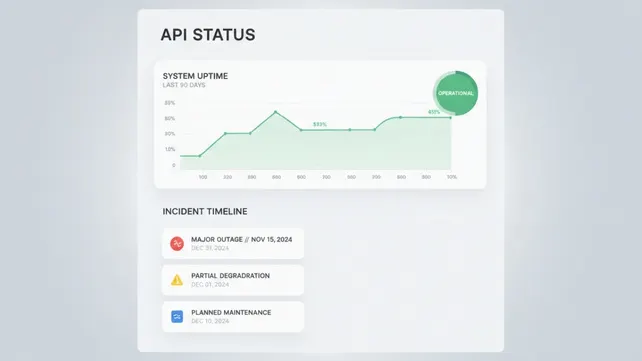
A UK-based fintech required absolute transparency from all API vendors. One API search provider stood out by publishing a public status page with detailed incident history going back several years.
During evaluation, the fintech’s reliability team reviewed past outages, response times, and resolution notes. Instead of seeing issues as red flags, they saw evidence of operational maturity and accountability.
Status Page Trust Factors
| Factor | Impact |
|---|---|
| Incident history | Credibility |
| Real-time updates | Confidence |
| Postmortems | Learning culture |
Product Discovery and Relevance Ranking for Search APIs
Product discovery is where search APIs directly influence revenue. Relevance ranking determines which results users see first—and whether they convert.
Advanced API search platforms use behavioral signals, semantic understanding, and configurable ranking rules to improve discovery. Their homepages often showcase before-and-after examples to demonstrate impact.
Relevance Ranking Signals
| Signal | Purpose |
|---|---|
| Click-through | Interest |
| Freshness | Accuracy |
| Context | Intent |
API Response Formats and Data Structures for Easy Integration
Consistent response formats reduce integration time. Tier One enterprises expect clean, predictable JSON with clear schemas and examples.
High-quality APIs document:
- Field definitions
- Optional vs required fields
- Pagination and filtering
Response Design Best Practices
| Feature | Benefit |
|---|---|
| Predictable schema | Faster dev |
| Clear pagination | Scalability |
| Rich metadata | Flexibility |
Expert Insight (US AI Engineers): How AI Models Interpret Search Intent in API Queries
US-based AI engineers emphasize that modern API search platforms succeed or fail based on how accurately they interpret user intent—not just keywords. Enterprise search queries are often ambiguous, incomplete, or context-dependent. AI-driven intent modeling helps resolve this by analyzing semantics, historical patterns, and entity relationships.
For example, a query like “top fintech companies” may imply ranking by revenue, funding, or growth. Advanced AI models infer intent using contextual signals and configurable defaults, reducing irrelevant results. This capability is especially valuable in enterprise environments where search results feed automated systems.
AI engineers caution that intent models must be transparent and tunable. Black-box relevance can create trust issues when results affect business decisions.
Search Platform Research (UK): Preventing Zero-Result Searches in Enterprise Systems
UK search researchers identify zero-result searches as a major friction point in enterprise systems. These failures reduce user confidence and often lead to abandonment. Advanced API search platforms mitigate this by using fallback strategies, synonym expansion, and semantic matching.
Instead of returning “no results,” systems intelligently broaden the query, suggest alternatives, or return partial matches. This approach is particularly important in UK enterprises where users expect graceful handling rather than hard failures.
Researchers also stress the importance of analytics. Tracking zero-result queries helps teams refine indexing strategies and improve data coverage.
Network Performance Study (Canada): Reducing Network Round-Trip Time for APIs
Canadian network engineers highlight geography as a core challenge for API performance. Long distances between users and centralized servers increase round-trip time (RTT), impacting search responsiveness.
Leading API search providers address this by deploying regional infrastructure and optimizing routing paths. Techniques like TCP optimization, connection reuse, and regional DNS routing significantly reduce RTT.
Studies show that reducing RTT by even 50–100ms improves perceived performance and lowers timeout rates in distributed systems.
Infrastructure Experts (Australia): Balancing Speed With Data Freshness
Australian infrastructure teams often face trade-offs between speed and data freshness. Aggressive caching improves performance but risks serving outdated results—problematic for compliance-sensitive use cases.
Experts recommend tiered caching strategies where frequently accessed data is cached aggressively, while time-sensitive data bypasses caches or refreshes dynamically. Clear cache invalidation policies are essential.
API search providers that document these strategies on their homepage signal maturity and operational awareness.
DevOps Leaders (US): Handling Traffic Spikes and Failover Events
US DevOps leaders stress that traffic spikes are inevitable—product launches, marketing campaigns, or external events can multiply API demand instantly.
Enterprise-grade API search platforms handle this with autoscaling, queueing, and load shedding. Failover mechanisms ensure continuity even when components fail.
DevOps teams value providers that publish architecture overviews and incident response processes publicly.
SRE Best Practices (UK): Ensuring Continuous API Uptime at Scale
UK Site Reliability Engineers (SREs) focus on error budgets and service-level objectives (SLOs) rather than raw uptime percentages. Mature API search platforms align operations around these metrics.
Practices like continuous monitoring, automated rollback, and chaos testing improve resilience. Public status pages and transparent incident communication reinforce trust.
Product Messaging Experts (US): Explaining an API’s Purpose in Under 5 Seconds
US product messaging experts agree: if an API’s purpose isn’t clear in five seconds, conversion drops sharply. Enterprise buyers don’t have time to decode vague language.
High-performing API search homepages lead with outcome-oriented messaging, immediately answering “What problem does this solve?” Supporting visuals and concise examples reinforce understanding.
Growth Teams (Canada): Guiding Users Toward Trials and Documentation
Canadian growth teams emphasize guided discovery over aggressive selling. API homepages should gently funnel users toward documentation, sandboxes, or trials based on intent signals.
Contextual CTAs—like “See Example Query” after feature explanations—outperform generic buttons.
UX Researchers (Australia): Optimizing API Homepages for All Screen Sizes
Australian UX researchers note that developers evaluate APIs across devices. Responsive layouts, readable code blocks, and accessible navigation improve first impressions.
Mobile optimization often determines whether users return to the desktop for deeper evaluation.
Accessibility Specialists (UK): Improving Usability for All Developers
Accessibility specialists in the UK increasingly play a role in evaluating technology vendors, especially for enterprise platforms used by diverse development teams. From their perspective, accessibility is not just a legal requirement—it is a signal of overall product quality. The best api search company’s homepage reflects this mindset by embedding inclusive design principles into its structure and content.
UK accessibility experts look for compliance with WCAG standards, including proper semantic HTML, keyboard navigation, sufficient color contrast, and screen-reader compatibility. These elements ensure that all developers—regardless of ability—can navigate documentation, understand onboarding steps, and interact with tools effectively.
Accessibility also improves clarity for everyone. Well-structured pages, descriptive labels, and logical content flow reduce cognitive load and speed up comprehension. The best api search company’s homepage often benefits from this by delivering a cleaner, more intuitive experience for all users, not just those with accessibility needs.
Key Takeaway:
Inclusive design strengthens usability across the board. When the best api search company’s homepage prioritizes accessibility, it signals engineering maturity, regulatory awareness, and a commitment to serving all developers in UK enterprise environments.
Security Architects (US): Choosing the Right Authentication Method
Security architects in the United States view authentication as the foundation of API trust. Choosing the wrong method can expose sensitive data, create operational risk, or slow down adoption. This is why the best api search company’s homepage clearly outlines supported authentication options and the scenarios they are designed for.
US security architects typically evaluate whether an API supports multiple authentication models, such as API keys for low-risk access, OAuth 2.0 for enterprise integrations, and token-based methods for fine-grained permission control. Flexibility matters because different teams and environments carry different risk profiles. A one-size-fits-all approach often fails enterprise security reviews.
Clarity is just as important as capability. When authentication workflows are explained upfront—rather than buried deep in documentation—security reviews move faster and with fewer assumptions. The best api search company’s homepage often summarizes authentication choices and links directly to implementation guides.
Key Takeaway:
Strong authentication is about alignment, not complexity. When the best api search company’s homepage communicates the right authentication options clearly, it helps US security architects protect systems while enabling scalable, enterprise-grade access.
Infrastructure Security Teams (Canada): Protecting APIs Without Blocking Legitimate Users
Infrastructure security teams in Canada face a constant balancing act: protecting APIs from abuse while ensuring legitimate enterprise traffic flows uninterrupted. From their perspective, security controls must be intelligent, adaptive, and clearly communicated. This is why the best api search company’s homepage often highlights balanced security strategies rather than aggressive, opaque restrictions.
Canadian security teams look for platforms that combine authentication, rate limiting, and behavioral analysis without introducing unnecessary friction. Static limits alone are rarely sufficient. Adaptive rate limiting, IP reputation analysis, and anomaly detection help prevent abuse while preserving performance for trusted users.
Transparency is critical. When a homepage clearly explains how security measures work and what triggers throttling or blocking, teams can design integrations that stay within safe boundaries. The best api search company’s homepage often links to detailed security documentation, helping security and engineering teams align early.
Key Takeaway:
Effective API security protects systems without harming users. When the best api search company’s homepage communicates thoughtful, adaptive security controls, it reassures Canadian infrastructure teams that protection and usability can coexist at enterprise scale.
Developer Advocates (UK): Reducing Time to First Successful API Call
Developer advocates in the UK measure the success of an API by one critical metric: time to first successful API call. If developers cannot authenticate, make a request, and receive a useful response quickly, interest drops and adoption stalls. The best api search company’s homepage is designed with this reality in mind, guiding developers smoothly from discovery to execution.
UK developer advocates look for homepages that prioritize documentation and examples over sales language. Clear “Get Started” links, copy-paste code samples, and interactive API explorers reduce hesitation and build confidence early. When authentication steps and basic queries are demonstrated upfront, developers feel empowered rather than overwhelmed.
Equally important is error clarity. Providers that document common mistakes and show expected responses help developers recover quickly without frustration. The best api search company’s homepage often links directly to these resources, reducing the time spent searching for answers.
Key Takeaway:
Early success drives long-term adoption. When the best api search company’s homepage minimizes the steps required to make a first successful API call, it aligns perfectly with the goals of UK developer advocates focused on engagement, retention, and community growth.
Platform Teams (Australia): Lowering Adoption Friction for New Users
Platform teams in Australia focus heavily on adoption friction, especially when introducing new APIs across large, distributed organizations. From their perspective, even technically strong platforms can struggle if onboarding feels complex or unclear. This is why the best api search company’s homepage places strong emphasis on simplicity, guidance, and first-time user success.
Australian platform teams look for clear onboarding paths that reduce decision fatigue. This includes visible links to documentation, quick-start guides, and sandbox environments directly from the homepage. When new users can move from evaluation to their first successful API call in minutes, internal advocacy becomes much easier.
Consistency also matters. Predictable response formats, stable endpoints, and clear versioning reduce the cognitive load on teams rolling out integrations across multiple products or departments. The best api search company’s homepage often highlights these qualities by showcasing developer experience and long-term stability alongside performance metrics.
Key Takeaway:
Lowering adoption friction accelerates scale. When the best api search company’s homepage communicates ease of onboarding and developer-friendly design, it empowers Australian platform teams to roll out new capabilities quickly and confidently across the organization.
Reliability Engineers (US): Verifying Reliability Claims in Real Time
Reliability engineers in the United States approach API vendor claims with healthy skepticism. For them, trust is built through evidence, not assurances. This is why the best api search company’s homepage prioritizes verifiable reliability signals that engineers can validate in real time.
US reliability teams look beyond stated uptime percentages. They want access to public status pages, real-time availability dashboards, and historical incident logs. These tools allow engineers to confirm how the platform performs under normal conditions and how quickly it recovers during disruptions. Providers that openly share this information demonstrate operational maturity and confidence.
Another critical factor is transparency around monitoring and alerting. When a homepage explains how outages are detected, escalated, and resolved, it reassures engineers that issues will not go unnoticed. The best api search company’s homepage often links directly to reliability documentation, making due diligence faster and more objective.
Key Takeaway:
Reliability claims only matter if they can be verified. When the best api search company’s homepage enables real-time validation of uptime and incident history, it earns the trust of US reliability engineers responsible for protecting enterprise systems at scale.
Conversion Analysts (UK): Improving Revenue Through Faster Search Results
Conversion analysts in the UK consistently link search performance to measurable revenue outcomes. From their perspective, faster search results reduce friction at critical decision points, keeping users engaged and moving toward conversion. The best api search company’s homepage reflects this reality by clearly connecting performance metrics to business impact rather than treating speed as a purely technical feature.
In e-commerce, SaaS, and marketplace environments, even small reductions in response time can significantly improve click-through rates and completion rates. UK analysts often cite that delays of a few hundred milliseconds are enough to increase abandonment, especially on mobile devices. As a result, they look for API providers that publish verifiable latency benchmarks and regional performance data.
The best api search company’s homepage builds trust by showing how faster search leads to tangible gains such as higher conversion rates, increased session depth, and improved user satisfaction. This framing helps align technical investment with revenue goals.
Key Takeaway:
Speed is not just an optimization—it’s a revenue lever. When the best api search company’s homepage demonstrates how faster search results drive conversion, it resonates strongly with UK analysts focused on growth, efficiency, and return on investment.
Integration Specialists (Canada): Ensuring Compatibility With Existing Systems
Integration specialists in Canada consistently emphasize that compatibility is one of the most underestimated factors in API search adoption. Even the most powerful platform can fail if it does not integrate cleanly with existing enterprise systems. For this reason, the best api search company’s homepage often highlights compatibility, standards, and integration flexibility as first-class concerns.
Canadian enterprises typically operate complex stacks that include CRMs, data warehouses, analytics tools, and legacy systems. Integration specialists look for APIs that follow RESTful conventions, use predictable JSON response formats, and support standard authentication methods. Just as important is backward compatibility—frequent breaking changes increase maintenance costs and introduce risk.
The best api search company’s homepage reduces uncertainty by clearly documenting supported protocols, SDKs, and common integration patterns. When compatibility details are easy to find, integration planning becomes faster and more accurate.
Key Takeaway:
Successful enterprise adoption depends on how well an API fits into what already exists. When the best api search company’s homepage communicates compatibility upfront, it reassures integration specialists that adoption will be smooth, scalable, and sustainable within established Canadian enterprise systems.
Conclusion: What a High-Trust API Search Homepage Signals to Serious Buyers
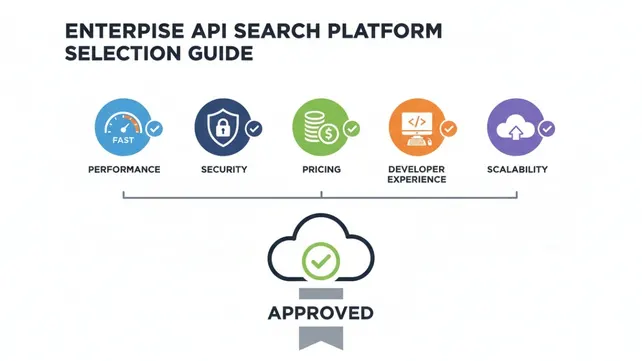
In Tier One markets—the US, UK, Canada, and Australia—the best api search company’s homepage is more than a marketing asset. It’s a risk signal, a technical briefing, and a trust contract rolled into one. Serious buyers don’t just read copy; they scan for evidence. They look for performance benchmarks they can verify, compliance standards they recognize, documentation they can use immediately, and pricing models that won’t surprise finance teams six months later.
The best API search company’s homepage consistently does a few things well. It explains the value proposition in seconds. It proves reliability with transparent metrics and public status pages. It respects developers with clear docs, sandboxes, and fast time-to-first-call. And it reassures legal and security teams by making compliance, authentication, and data boundaries visible—not buried.
Across this guide, one pattern is clear: high-converting API homepages reduce friction at every stage of the buyer journey. They shorten evaluation cycles, accelerate internal approvals, and increase long-term adoption by aligning UX, DX, and enterprise realities from the first click.
Final Takeaway:
If a homepage feels vague, hides limits, or avoids specifics, the risk doesn’t disappear—it compounds later. Choose API search platforms whose homepages reflect operational maturity, transparency, and readiness for scale in regulated economies.
FAQ About the Best Api Search Company’s Homepage
What matters most when evaluating an API search homepage for enterprise use?
When evaluating an API search homepage for enterprise use, the most important factor is how effectively it reduces risk while accelerating adoption. The best api search company’s homepage makes critical information immediately visible, allowing technical, security, and business stakeholders to assess fit without guesswork.
Enterprise buyers first look for clarity. Within seconds, the homepage should explain what the API does, who it serves, and the problems it solves. Next comes proof—verifiable performance metrics, uptime guarantees, and links to public status pages that build trust. Compliance visibility is equally important, especially in Tier One markets where regulations like GDPR and CCPA affect procurement decisions.
Developer experience also plays a central role. Easy access to documentation, quick-start guides, SDKs, and sandbox environments signals faster time-to-value and lower integration cost. Pricing transparency and clear rate limits help finance teams forecast spend accurately.
The best api search company’s homepage succeeds when it aligns technical credibility, compliance confidence, and business clarity—helping enterprises move from evaluation to production with minimal friction.
How can API performance and uptime claims be independently verified?
API performance and uptime claims should never be accepted at face value, especially in enterprise environments. The best api search company’s homepage makes verification straightforward by linking directly to tools and data that buyers can independently review.
The most reliable method is a public status page that shows real-time availability, historical uptime, and detailed incident timelines. These pages allow teams to confirm whether advertised uptime matches actual performance over time. Many enterprise buyers also look for third-party monitoring references or synthetic uptime tracking to validate claims outside the provider’s own infrastructure.
During evaluation, technical teams often run controlled tests using trial access, measuring response time, error rates, and regional latency under realistic conditions. Architecture documentation that explains failover strategies, regional deployments, and scaling behavior adds further confidence.
Trust is built through transparency. When the best api search company’s homepage enables real-world verification of performance and uptime claims, it empowers enterprises to make data-driven decisions with confidence rather than relying on marketing language.
Why does pricing transparency increase trust and conversion rates?
Pricing transparency increases trust and conversion rates because it removes uncertainty at one of the most sensitive stages of the buying process. Enterprise buyers want to understand costs before committing engineering time or involving procurement. The best api search company’s homepage addresses this directly by clearly explaining pricing models, usage limits, and potential overage costs upfront.
When pricing is visible and easy to understand, buyers can quickly assess whether an API fits their budget and scale requirements. This reduces hesitation and shortens evaluation cycles. In contrast, vague “contact sales” pricing often signals hidden fees or unpredictable costs, which can slow decisions or deter trials altogether.
Transparent pricing also builds internal alignment. Finance, engineering, and leadership teams can evaluate the same information without assumptions or back-and-forth. The best api search company’s homepage often pairs pricing clarity with credit-based or tiered models, helping buyers match cost to value.
Clear pricing builds confidence. When the best api search company’s homepage is transparent about costs, it attracts more qualified users, increases trial conversions, and strengthens long-term trust.
Where should security and compliance information be placed on an API homepage?
Security and compliance information should be placed where enterprise buyers can find it immediately, not buried deep in documentation. The best api search company’s homepage typically surfaces these details above the fold or provides a clearly labeled “Security” or “Compliance” section in the main navigation.
In Tier One markets, legal, security, and procurement teams often review a homepage before engaging with sales or technical teams. Visible references to standards such as GDPR, CCPA/CPRA, SOC 2, ISO 27001, and regional data handling practices reduce uncertainty early in the evaluation process. Clear explanations of authentication methods, rate limiting, and data retention policies further strengthen trust.
When security and compliance information is easy to access, internal reviews move faster and with fewer follow-up questions. The best api search company’s homepage uses placement strategically to signal that compliance is a core design principle, not an afterthought.
Visibility equals confidence. Placing security and compliance information prominently on the best api search company’s homepage accelerates enterprise approval and reinforces credibility from the first visit.
How do services like CapSolver and Scrapeless fit into the API search ecosystem?
Services like CapSolver and Scrapeless typically function as supporting tools within the broader API search ecosystem rather than full replacements for enterprise search platforms. The best api search company’s homepage often clarifies this distinction by positioning its API as the core, compliant search layer while acknowledging where auxiliary services can add value.
CapSolver is commonly used to handle CAPTCHA challenges and anti-bot mechanisms, while Scrapeless focuses on flexible data extraction and scraping workflows. These tools can be useful in niche scenarios, such as supplementing data collection or handling edge cases where structured APIs are unavailable. However, they may introduce additional operational and compliance considerations, especially in regulated Tier One markets.
Enterprise buyers typically rely on robust API search platforms for stability, legality, and scalability, using tools like CapSolver or Scrapeless selectively when needed. The best api search company’s homepage helps buyers understand these roles by emphasizing compliant data access, predictable performance, and enterprise-grade reliability.
Complementary tools can enhance flexibility, but enterprise success depends on a strong foundation. When the best api search company’s homepage clearly defines its role within the API search ecosystem, it helps teams combine tools strategically without increasing risk or complexity.
#For more options, check our Best Pillow for Side Sleepers guide with recommendations for neck and shoulder support.

