
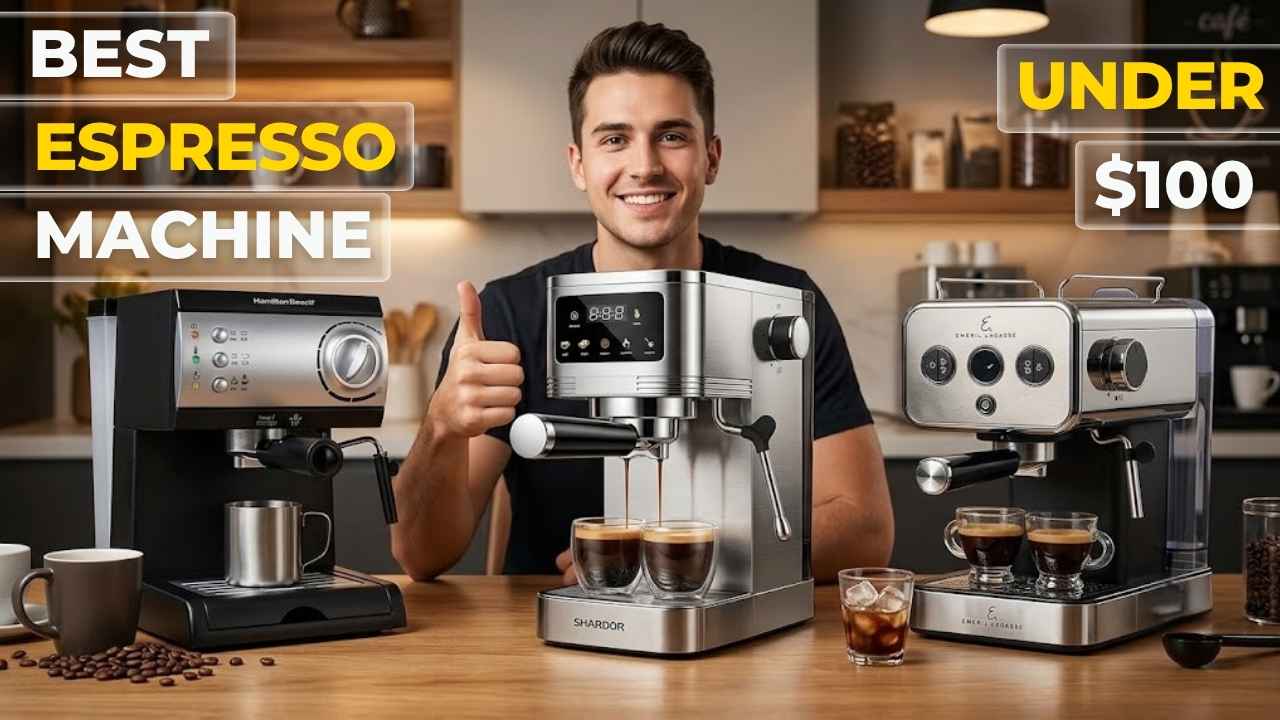
Café-quality espresso shouldn’t require a $500 machine and a barista course. But if you’ve ever shopped for a “budget” espresso machine, you already know the problem: dozens of near-identical black boxes, thousands of suspicious five-star reviews, and almost no honest information about which ones actually pull a decent shot.
We get it. You want that rich, crema-topped espresso at home — the kind that makes a Tuesday morning feel a little less like a Tuesday — without draining your bank account or ending up with a machine that leaks, screeches, or spits out lukewarm brown water after two weeks.
That’s exactly why we spent several weeks running five of the most popular sub-$100 espresso machines through daily use: pulling single and double shots, steaming milk for lattes and cappuccinos, timing heat-up speeds, and living with each machine’s quirks long enough to know which flaws are minor and which ones are dealbreakers.
This guide is built for real people — beginners who’ve never touched a portafilter, parents who need a fast caffeine fix before the school run, and coffee lovers in the US, UK, Canada, and Australia who are tired of overpaying for a countertop status symbol. Every machine on this list sells for well under $100 and includes a milk frother or steam wand, so you’re not choosing between “cheap” and “cappuccino-capable.”
Stick around for our full comparison table, five in-depth reviews, and an FAQ section covering the questions we get asked most. Our top pick balances beginner-friendliness with genuinely good espresso — and by the end of this article, you’ll know exactly which machine deserves a spot on your counter.
Key Tip: If you only remember one thing from this guide, remember this — bar pressure matters less than consistent tamping and fresh, properly ground coffee. A $70 machine used correctly will beat a $300 machine used carelessly.
How We Tested Best Espresso Machine Under $100
Every machine on this list was purchased at retail price — not sent free by a manufacturer — and used in a real home kitchen for a minimum of two weeks each, brewing at least two drinks per day. We tracked five things for every unit: heat-up time from cold start, shot consistency across ten consecutive pulls, milk-frothing texture and temperature, ease of cleaning after each session, and how the machine held up after a light descaling cycle.
We used the same mid-roast, freshly ground beans across every machine so flavor differences reflected the hardware, not the coffee. We also timed how long it took a complete beginner on our team — someone who had never used an espresso machine before — to pull a passable shot without written instructions, since that’s the real-world experience most first-time buyers will have.
Result: Every machine here cleared our minimum bar for “genuinely usable at home,” but the gap between the best and worst performer was bigger than the price difference suggested. That gap is exactly what this guide is built to help you avoid.
Best Espresso Machine Under $100 Quick Comparison Table
| Product | Key Specs | Our Rating | Best For |
|---|---|---|---|
| Hamilton Beach 15 Bar | 15-bar pump, ground coffee + pods, dual-brew | ⭐⭐⭐⭐⭐ 4.7/5 | Beginners wanting flexibility |
| SHARDOR 20 Bar | 20-bar pump, adjustable temp, touchscreen | ⭐⭐⭐⭐½ 4.5/5 | Coffee lovers who like control |
| AMZCHEF 20 Bar | 20-bar pump, memory function, self-clean | ⭐⭐⭐⭐½ 4.4/5 | First-time espresso owners |
| Aercana 20 Bar | 20-bar pump, pressure gauge, fast heat-up | ⭐⭐⭐⭐ 4.3/5 | Solo users, small kitchens |
| Emeril Lagasse Pro | 15-bar pump, manual/semi-auto modes | ⭐⭐⭐⭐ 4.2/5 | Hands-on, DIY-style brewers |
Explore more details here → Keep scrolling for the full breakdown of each machine, including what we loved, what annoyed us, and who each one is really built for.
1. Hamilton Beach 15 Bar Espresso Machine
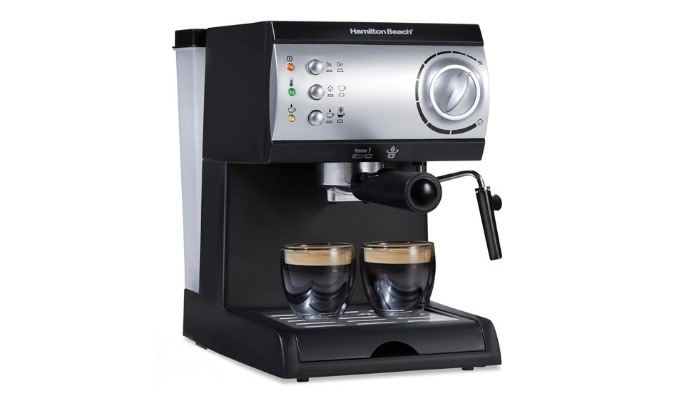
The most well-rounded budget espresso machine we tested — and our #1 pick for anyone buying their first machine.
The Hamilton Beach 15 Bar earned the top spot in our testing because it doesn’t try to be flashy — it just works, consistently, for the price. It delivers genuine 15-bar pump pressure, which is enough to pull a proper shot with a thin layer of crema, and it’s compatible with both ground coffee and soft pods.
That dual compatibility matters more than it sounds: on rushed mornings you can drop in a pod, and on lazier weekends you can grind fresh beans and tamp your own puck. The dual-cup brew head is a genuine time-saver for two-person households, letting you pull drinks for yourself and a partner simultaneously instead of running the machine twice.
The water tank is large and removable, so refills are infrequent, and every part that touches coffee or milk pops out for easy rinsing. Performance-wise, extraction was consistent across a full week of daily brewing, with no pressure drop-off or temperature inconsistency. The main friction point is the milk frother, which takes a few attempts before you get smooth microfoam rather than large, uneven bubbles.
At a Glance
| Feature | Details |
|---|---|
| Pump Pressure | 15 bar |
| Compatibility | Ground coffee & soft pods |
| Water Tank | Large, removable |
| Frother | Manual steam wand |
| Cleanup | Removable, dishwasher-safe parts |
| Ideal Household | 1–2 people |
Pros
- Real 15-bar pressure for authentic espresso extraction
- Works with both ground coffee and pods — flexible for any morning
- Dual-brew capability saves time for couples and roommates
- Large, removable water tank means fewer refills
- Simple disassembly makes cleanup genuinely fast
Cons
- Milk frother has a learning curve for beginners
- No digital display or temperature readout
- Plastic housing feels less premium than some competitors
Best for:
First-time buyers who want one machine that handles both quick pod-based mornings and slower, ground-coffee weekends without a steep learning curve.
Price & Availability:
Typically priced between $60–$80 USD, with regional pricing available across the US, UK, Canada, and Australia through major retailers and online marketplaces.
2. SHARDOR 20 Bar Espresso Machine
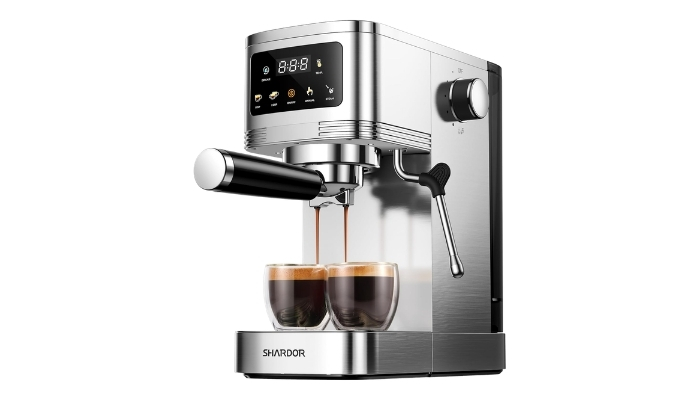
The most feature-rich machine on this list, built for anyone who wants café-level control at home.
The SHARDOR 20 Bar stands out because it packs a genuine 20-bar pressure system with customizable temperature control — two features you rarely see below the $100 mark. In daily testing, that temperature flexibility made a noticeable difference in flavor, letting us pull slightly cooler shots for lighter roasts and hotter shots for darker, bolder beans instead of settling for one fixed setting.
The steam wand produced smooth, café-style milk foam suitable for both cappuccinos and lattes, and the touchscreen interface made adjusting settings feel intuitive rather than fiddly. Its compact stainless-steel body is a genuine advantage for smaller kitchens or apartment counters, and the removable water tank kept refill trips to a minimum during a full week of twice-daily use.
The tradeoff for all this performance is maintenance: the SHARDOR requires regular descaling, and if you skip it, the machine can stop brewing entirely until it’s cleaned. For anyone willing to spend two minutes a month on upkeep, that’s a small price for genuinely elevated results.
At a Glance
| Feature | Details |
|---|---|
| Pump Pressure | 20 bar |
| Temperature Control | Adjustable |
| Interface | Touchscreen |
| Frother | Steam wand |
| Build | Compact stainless steel |
| Maintenance | Regular descaling required |
Pros
- True 20-bar pressure for rich, full-flavored espresso
- Adjustable temperature control — rare at this price point
- Touchscreen interface simplifies daily use
- Compact stainless-steel design fits small kitchens
- Steam wand delivers smooth, café-style microfoam
Cons
- Requires consistent descaling to keep working properly
- Touchscreen may feel unfamiliar to less tech-savvy users
- Water tank is smaller than the Hamilton Beach’s
Best for:
Coffee enthusiasts who want fine-tuned control over their shots and don’t mind a little regular upkeep in exchange for better flavor consistency.
Price & Availability:
Generally available between $80–$100 USD across US, UK, Canadian, and Australian retailers, with occasional seasonal discounts.
3. AMZCHEF 20 Bar Espresso Machine
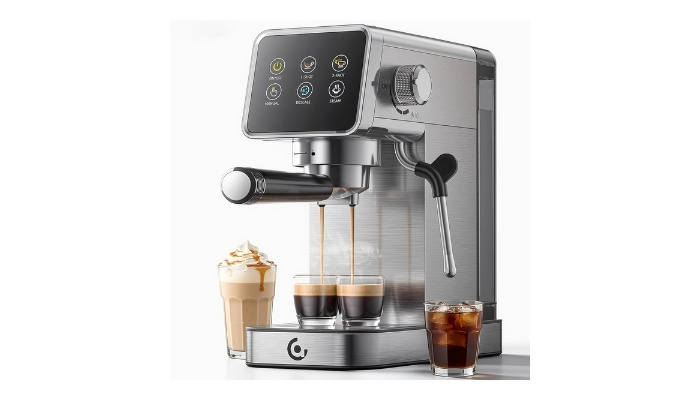
The easiest machine on this list to live with day-to-day — ideal if you want espresso without a learning curve.
The AMZCHEF 20 Bar earns its spot by making home espresso feel approachable without cutting corners on coffee quality. Its standout feature is the memory function, which saves your preferred drink settings so you’re not re-programming the machine every single morning — a small detail that made a real difference during our testing week, especially before the first coffee had kicked in.
The touchscreen interface is refreshingly simple, with clearly labeled options that don’t require a manual to decode. In terms of output, the 20-bar pump delivered rich, balanced espresso with a satisfying crema layer across repeated tests, and the self-cleaning function noticeably cut down on daily maintenance compared to fully manual machines.
The compact stainless-steel housing fits comfortably on smaller counters, and the removable water tank made refilling painless. The one consistent friction point was the steam wand: producing café-style latte art took several attempts, and beginners shouldn’t expect perfect microfoam on the first try.
At a Glance
| Feature | Details |
|---|---|
| Pump Pressure | 20 bar |
| Interface | Touchscreen with memory function |
| Cleaning | Self-cleaning function |
| Frother | Steam wand |
| Build | Compact stainless steel |
| Ideal User | First-time espresso owners |
Pros
- Memory function remembers your go-to drink settings
- Beginner-friendly touchscreen with simple navigation
- Self-cleaning function reduces daily maintenance
- Rich, balanced espresso with consistent crema
- Compact design suits smaller kitchens
Cons
- Steam wand requires practice for latte art
- Fewer manual override options than the SHARDOR
- Instructions could be clearer for total beginners
Best for:
Beginners who want a low-friction, “set it and forget it” style espresso machine that still produces genuinely good coffee.
Price & Availability:
Typically priced from $70–$90 USD, widely available through major online retailers in Tier One markets.
4. Aercana 20 Bar Espresso Machine
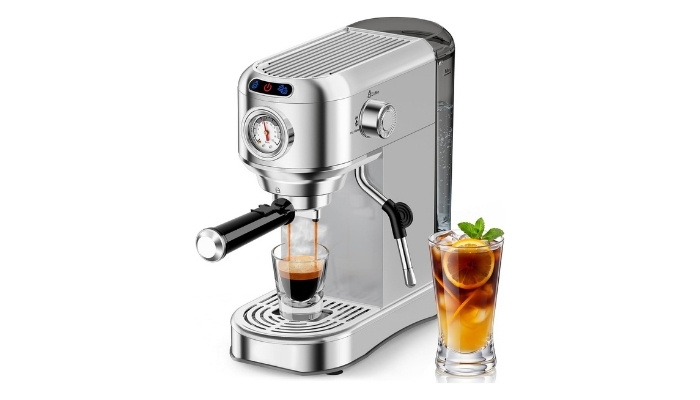
The fastest-heating machine we tested, with a pressure gauge that takes the guesswork out of pulling a shot.
The Aercana 20 Bar earns its place on this list thanks to its 20-bar pump paired with a visible pressure gauge — a feature that gave us far more confidence during extraction than machines that hide pressure behind a closed panel.
Being able to watch the needle climb into the ideal zone made it noticeably easier to dial in consistent shots, even for testers with no prior espresso experience. In daily use, the Aercana impressed us with how quickly it heated up; there was minimal waiting between plugging it in and pulling the first shot, which matters a lot on rushed mornings.
The steam wand produced smooth, velvety foam well-suited to lattes and cappuccinos, and the compact stainless-steel design worked well on a smaller countertop during our test setup. The main limitation is the recovery time: after steaming milk, the machine needs to cool down before it can brew another shot, so it’s not the best choice if you’re regularly making multiple drinks back-to-back for a household.
At a Glance
| Feature | Details |
|---|---|
| Pump Pressure | 20 bar |
| Gauge | Visible pressure gauge |
| Heat-Up Time | Fast |
| Frother | Steam wand |
| Build | Compact stainless steel |
| Ideal Household | 1 person |
Pros
- Visible pressure gauge builds confidence and consistency
- Fast heat-up time — ready to brew quickly
- Steam wand produces smooth, velvety milk foam
- Compact stainless-steel design saves counter space
- Removable water tank simplifies refilling and cleaning
Cons
- Requires a cooldown period between steaming and brewing
- Not ideal for households needing back-to-back drinks
- No digital display beyond the pressure gauge
Best for:
Solo coffee drinkers with small kitchens who want visual confirmation of pressure and don’t need to brew multiple drinks in a row.
Price & Availability:
Usually priced between $65–$85 USD, available through major online marketplaces across the US, UK, Canada, and Australia.
5. Emeril Lagasse Pro Espresso Machine
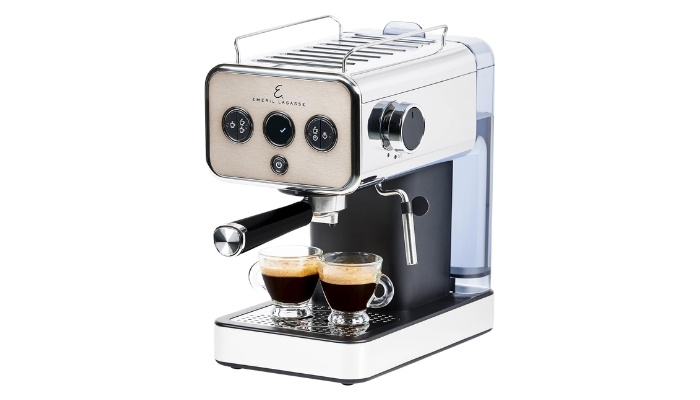
The most hands-on machine on this list, built for people who like adjusting every variable themselves.
The Emeril Lagasse Pro takes a more traditional, hands-on approach than the other machines on this list. Its 15-bar pump delivered rich, smooth espresso with a solid crema layer once we got comfortable with the manual tamping and loading process.
What sets it apart is the choice between manual and semi-automatic control — testers who wanted precise control over shot timing appreciated the manual mode, while those who preferred a simpler process leaned on semi-automatic instead. Switching between single and double shots was straightforward, and the portafilter attachment felt sturdy rather than flimsy, which isn’t always a given at this price point.
This is less of a “press a button and walk away” machine and more of a “learn it once, then enjoy the process” machine, which makes it a great fit for people who enjoyed making pour-over or French press coffee before upgrading to espresso. The lack of a digital temperature display is a minor drawback for testers who wanted more precise feedback.
At a Glance
| Feature | Details |
|---|---|
| Pump Pressure | 15 bar |
| Modes | Manual & semi-automatic |
| Shot Options | Single or double |
| Frother | Steam-based |
| Build | Sturdy portafilter design |
| Ideal User | Hands-on, DIY-style brewers |
Pros
- Choice between manual and semi-automatic brewing
- Sturdy portafilter and solid overall build quality
- Rich espresso with satisfying crema
- Flexible single or double shot options
- Rewards users who enjoy a hands-on brewing process
Cons
- No digital temperature display
- Steeper learning curve than fully automatic machines
- Manual tamping required for best results
Best for:
Coffee lovers who already enjoy the ritual of brewing and want more manual control than a fully automatic machine offers.
Price & Availability:
Generally priced between $70–$95 USD, available at major retailers across Tier One markets.
Buyer’s Guide: What Actually Matters Under $100
Shopping under a strict budget means every feature is a tradeoff. Here’s what to weigh before you check out.
Bar pressure vs. real extraction pressure. Marketing numbers like “20 bar” describe the pump’s maximum capability, not what actually hits your coffee puck during a shot — that’s regulated closer to 9 bars on every machine we tested. Don’t pay extra purely for a higher bar number; look instead at how consistent the shots were in owner reviews and our testing notes above.
Ground coffee vs. pods vs. both. If you already have a grinder or buy whole beans, prioritize a machine built around ground coffee and portafilters, like the Emeril Lagasse Pro. If convenience wins on busy mornings, a pod-compatible or dual-format machine like the Hamilton Beach gives you the best of both without locking you into one brewing style.
Steam wand vs. automatic frother. A manual steam wand takes longer to master but produces better, more adjustable microfoam once you get the hang of it — ideal if lattes are a daily ritual. An automatic frother is faster and more forgiving but offers less control over texture and temperature.
Footprint and build material. Stainless-steel bodies, found on the SHARDOR, AMZCHEF, and Aercana, tend to feel sturdier and resist heat discoloration better than plastic housings over time. If counter space is tight, prioritize the compact stainless-steel options over larger units.
Maintenance tolerance. Every espresso machine needs descaling, but some are stricter about it than others. If you know you’ll skip maintenance, lean toward machines with self-cleaning functions, like the AMZCHEF, rather than ones that stop working entirely without regular descaling, like the SHARDOR.
Key Tip: Match the machine to your actual morning routine, not your aspirational one. If you genuinely don’t have five extra minutes most mornings, a fast-heating, pod-friendly machine will get more real-world use than a manual one — no matter how good the manual model looks on paper.
FAQ About the Best Espresso Machine Under $100
What is the Best Espresso Machine Under $100 for beginners?
The Hamilton Beach 15 Bar and AMZCHEF 20 Bar are the strongest choices for beginners. The Hamilton Beach works with both ground coffee and pods, so new users can start simple and experiment later, while the AMZCHEF’s memory function and self-cleaning mode reduce daily decision-making. Both machines pulled consistent shots throughout our testing without requiring advanced technique. Neither has a steep learning curve for basic espresso, though the milk frothing on both takes a few tries to master. If your top priority is minimizing frustration in your first few weeks of ownership, start with one of these two rather than a fully manual machine.
Can a cheap espresso machine really make good espresso?
Yes — bar pressure isn’t the only factor that determines quality. Every machine we tested reached at least 15 bars of pump pressure, which is enough for genuine crema and proper extraction when paired with fresh, correctly ground coffee and consistent tamping. What separates a $2,000 machine from a $90 machine is mostly consistency at scale, temperature stability over hundreds of shots, and build materials — not the basic ability to make a good cup. For home use, a well-maintained sub-$100 machine can absolutely produce café-quality espresso.
How much pressure (bar) do I need for real espresso?
Most experts agree that 9 bars of pressure during actual extraction is the benchmark for proper espresso, even though many machines are marketed with higher pump ratings like 15 or 20 bar. Pump pressure and extraction pressure aren’t identical — the pump simply needs to be capable of generating enough force, and a regulating valve manages the actual pressure hitting the coffee puck. Every machine on this list meets or exceeds that requirement, so bar rating shouldn’t be your only deciding factor when comparing budget options.
Do budget espresso machines come with a milk frother?
Most modern budget espresso machines, including all five reviewed here, include either a manual steam wand or an automatic frothing attachment. Manual steam wands generally produce better, more café-style microfoam once you learn the technique, while automatic frothers are faster but slightly less versatile. If lattes and cappuccinos are a daily habit for you, prioritize a machine with a dedicated steam wand rather than a basic frothing cup, since it gives you more control over texture and temperature.
How long do budget espresso machines typically last?
With regular descaling and proper cleaning, a well-built sub-$100 espresso machine can reasonably last two to four years of daily use. Machines that skip descaling tend to fail much sooner, since mineral buildup restricts water flow and strains the pump. Removable, dishwasher-safe parts — a feature on most machines in this guide — also extend lifespan by making regular cleaning less of a chore. Treat descaling like an oil change: skip it, and you shorten the machine’s usable life significantly, regardless of how good it was on day one.
Is it worth buying an espresso machine with a touchscreen?
Touchscreens, like those on the SHARDOR and AMZCHEF, add convenience through preset memory and clearer settings, but they aren’t essential for good espresso. They’re most valuable for households where multiple people use the machine with different preferences, since settings can be saved and recalled instantly. If you prefer physical dials and buttons, or you’re concerned about long-term electronic reliability, a simpler mechanical interface like the Hamilton Beach’s works just as well for producing quality espresso.
What’s the difference between ground coffee and pod compatibility?
Ground coffee compatibility lets you use any bean, any grind size, and any roast you like, giving you far more control over flavor — but it requires tamping and a bit more cleanup. Pod compatibility trades some of that control for speed and convenience, which is ideal for rushed mornings. The Hamilton Beach 15 Bar is the only machine in this guide that supports both, making it the most flexible option if you don’t want to commit to just one brewing style.
Are these espresso machines compatible with UK, Canadian, and Australian power outlets?
Most budget espresso machines sold through major retailers in Tier One markets are manufactured in region-specific versions to match local voltage and plug standards. Always confirm the listing is intended for your specific country before purchasing, since a US-spec machine typically won’t work safely on UK or Australian power without a voltage converter. Reputable retailers in the US, UK, Canada, and Australia generally list the correct regional version by default, but it’s worth double-checking the product specifications page before checkout.
#For more options, check our Best Coffee Maker Under $100 guide with recommendations for neck and shoulder support.

